
Savory Greek Salad with Zesty Herby Dressing You’ll Love
Last Updated on May 8, 2026 by enricorecipez
When the warm glow of summer sunshine floods my kitchen, I find myself reaching for vibrant, fresh ingredients that awaken my senses. This Classic Greek Salad is a delightful celebration of Mediterranean flavors, showcasing the crispness of cucumber, the burst of sweet cherry tomatoes, and the creaminess of feta cheese, all tied together with a zesty herby dressing. It s an effortless way to transform everyday meals into something extraordinary, whether you’re serving it alongside grilled meats or enjoying it as a light main dish.
After a long day, the simplicity of this salad is a game-changer. With just a few key ingredients, you can whip up a dish that feels both indulgent and healthful. Plus, it s versatile feel free to swap in radishes or even lettuce for a creative twist. So, let s dive into this refreshing recipe that encapsulates the essence of summer and brings a burst of flavor to your table!
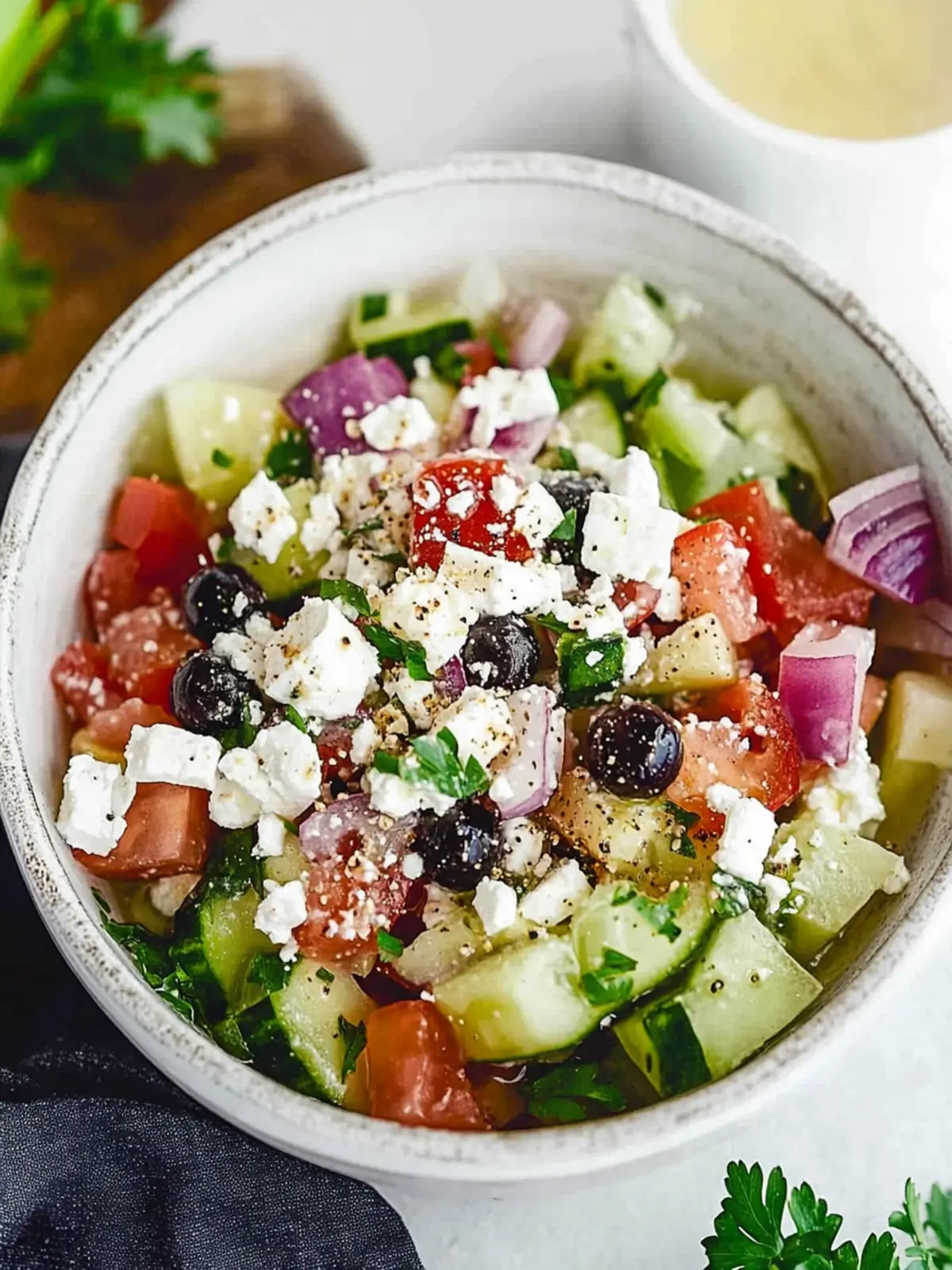
Why is Greek Salad the Ultimate Summer Dish?
**Freshness **is key: This salad bursts with vibrant, crunchy vegetables and is perfect for hot days. Quick preparation means you’ll have a delicious, nutritious meal in no time! Versatile ingredients allow for easy substitutions; swap in radishes or grilled chicken for a twist. Nutrient-packed, it’s gluten-free and vegetarian-friendly, making it a dish everyone can enjoy. For a delightful summer picnic, serve it alongside grilled meats or pita with tzatziki. Your taste buds will thank you!
Greek Salad Ingredients
Elevate your dish with fresh flavors!
For the Dressing
- Olive Oil Adds richness and acts as the base for the dressing; use high-quality extra virgin for maximum flavor.
- Red Wine Vinegar Provides acidity and brightness; can be substituted with apple cider vinegar if needed.
- Mustard Adds a slight tanginess to the dressing; Dijon is preferred, but whole grain works too.
- Dried Oregano Imparts an earthy flavor characteristic of Greek cuisine; fresh oregano can be used in a pinch just use 3 times more.
- Salt Enhances overall flavor; adjust according to your taste preferences.
- Pepper Adds mild spice; freshly ground black pepper is recommended for the best flavor.
- Lemon Juice Freshens the dressing and adds a citrusy zing; substitute with lime juice if desired.
For the Salad
- Cucumber Provides crunch and freshness; English cucumber is ideal, but any variety can work.
- Cherry Tomatoes Bursting with sweetness and color; substitute with diced regular tomatoes if unavailable.
- Olives Adds saltiness and a briny flavor; Kalamata olives are traditional, but green olives may also be used.
- Red Onion Offers a sharp bite and vibrant color; shallots can be a milder substitute.
- Feta Cheese Creamy and tangy component; omit for a dairy-free version or substitute with vegan cheese.
How to Make Greek Salad
Prepare the Dressing: In a small bowl, whisk together the olive oil, red wine vinegar, mustard, dried oregano, salt, pepper, and lemon juice until well combined. Set it aside to let the flavors meld.
Combine Salad Ingredients: In a large bowl, add the chopped cucumber, halved cherry tomatoes, olives, thinly sliced red onion, and crumbled feta cheese. Toss gently to mix everything together evenly.
Add Dressing: Pour your prepared dressing over the salad mixture. Gently stir everything to ensure the veggies are coated but take care not to mush up the feta.
Serve: Transfer the salad to a serving dish, garnishing with extra feta if you like. Enjoy fresh, letting the beautiful colors shine!
Optional: Add a sprinkle of fresh herbs, such as parsley or oregano, before serving for an extra pop of flavor.
Exact quantities are listed in the recipe card below.
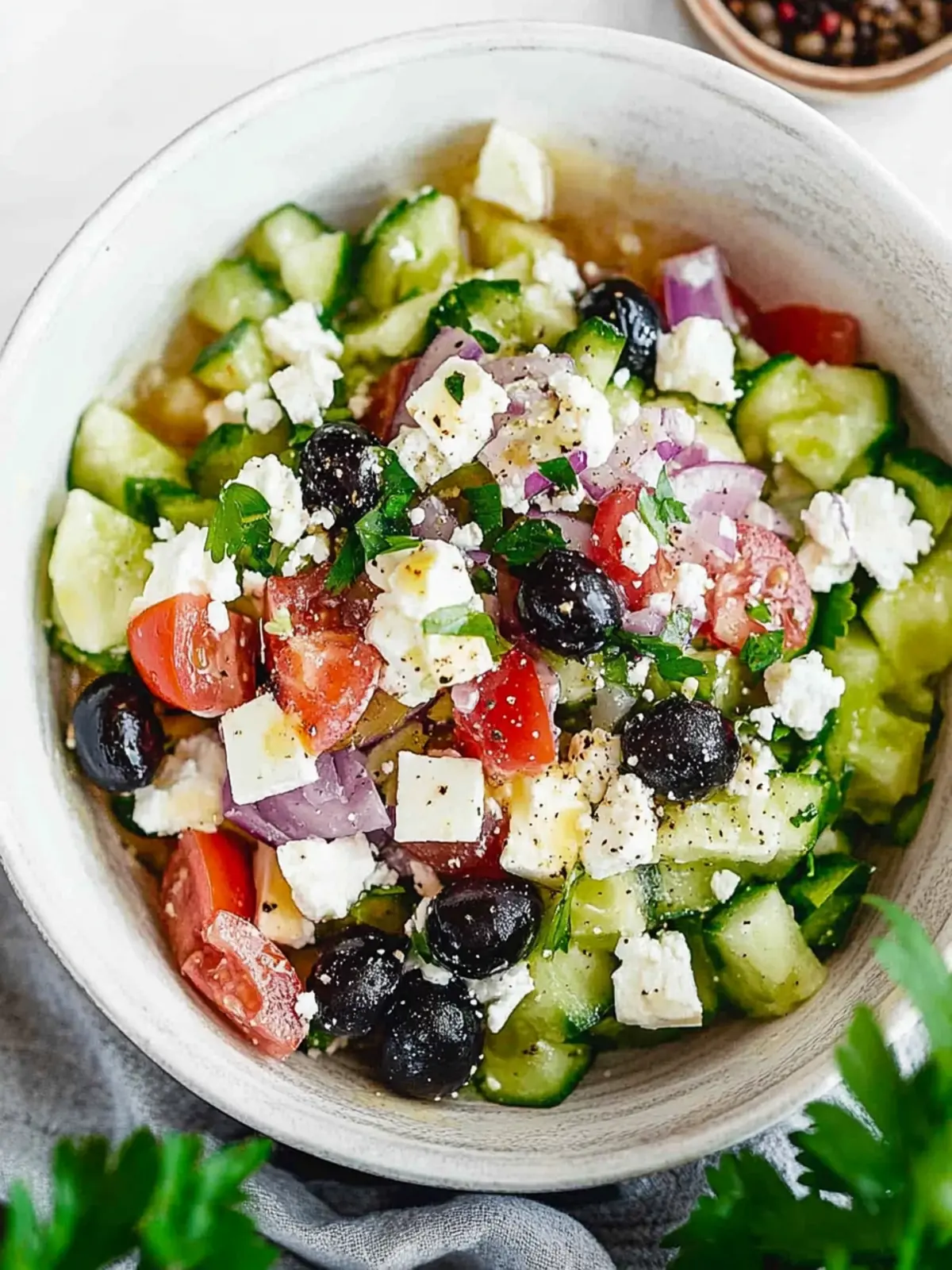
Expert Tips for Greek Salad
Fresh Ingredients Matter: Use the ripest cherry tomatoes and crispest cucumbers for a vibrant Greek Salad that truly shines.
Season to Taste: Always adjust salt and pepper according to your preferences. A little tweak can elevate the flavors significantly!
Prep Ahead: For the best taste, prepare the dressing in advance and let it sit for a few hours. This allows the flavors to deepen before adding to your Greek Salad.
Mix Before Serving: Combine dressing with the salad just before serving to keep everything fresh and crunchy.
Explore Substitutions: Don’t hesitate to swap ingredients, like using radishes for an added crunch or omitting feta completely for a lighter, dairy-free version!
What to Serve with Greek Salad?
Elevate your meal with delightful pairings that harmonize beautifully and bring out the fresh flavors of your Greek Salad.
Grilled Chicken: Tender and juicy, grilled chicken provides satisfying protein that complements the crisp veggies wonderfully. A drizzle of lemon juice enhances the dish s bright notes.
Pita Bread: Soft and fluffy, pita bread is perfect for scooping up bites of salad. Serve with tzatziki for a tasty Mediterranean twist that adds creaminess to each mouthful.
Quinoa Pilaf: Nutty quinoa adds a wholesome touch, delivering a chewy texture that contrasts with the salad s crunchiness. It makes a stellar side for a filling, nutritious meal.
Roasted Veggies: Sweet caramelized veggies bring warmth and depth to your table. Their earthy flavors balance the refreshing nature of the Greek Salad, making for a well-rounded dinner.
Sparkling Water with Lemon: Crisp sparkling water infused with a splash of citrus quenches your thirst and refreshes your palate, enhancing the bright flavors of the salad.
Baklava: End your meal on a sweet note with this sticky, nutty dessert. Baklava’s rich sweetness contrasts beautifully with the zesty herby notes of the salad, creating a delicious finale.
Storage Tips for Greek Salad
- Fridge: Store leftovers in an airtight container for up to 3 days. Keep the salad and dressing separate to maintain freshness and prevent sogginess.
- Freezer: Freezing is not recommended for Greek Salad due to the texture of the vegetables and feta, which may become mushy upon thawing.
- Reheating: If you ve added any proteins, such as grilled chicken, reheat them separately in the microwave or oven before serving. Toss with fresh ingredients to revitalize taste.
- Serving Fresh: For the best experience, enjoy your Greek Salad fresh, using the leftover salad ingredients within a few days for other meals, like wraps or grain bowls.
Make Ahead Options
These delightful Greek Salad preparations are perfect for busy home cooks looking to save time during the week! You can chop and refrigerate the cucumber, tomatoes, onions, and olives up to 3 days in advance, keeping them in an airtight container to maintain freshness and crunch. It s best to prepare the dressing up to 24 hours ahead and store it separately in the fridge, allowing the flavors to meld beautifully. When you re ready to serve, simply toss your prepped vegetables with the dressing and crumble the feta on top for a refreshing, vibrant salad that tastes just as delicious as if it were made fresh!
Greek Salad Variations
Customize your Greek Salad with delightful twists that will elevate your dining experience!
Radish Crunch: Add sliced radishes for extra crunch and a peppery bite that complements the salad perfectly.
Artichoke Hearts: Toss in marinated artichoke hearts for a tangy Mediterranean flair, making every bite more vibrant and exciting.
Dairy-Free Delight: Omit feta for a dairy-free version or swap it with a creamy vegan cheese alternative for a similar texture.
Protein Boost: Include grilled chicken or shrimp to transform your salad into a fulfilling main course, perfect for a heartier meal.
Quinoa Addition: Mix in cooked quinoa for added protein and a nutty flavor, enhancing the salad s texture and heartiness.
Herb Explosion: Fresh herbs like dill or parsley can amplify the flavors, offering a fragrant and herbaceous lift to each bite.
Spiced Kick: Add diced jalapeños or a sprinkle of red pepper flakes to introduce a subtle heat that wakes up your palate.
Citrus Twist: Swap lemon juice for lime for a zesty twist, giving your herby dressing a refreshing change that brightens the salad.
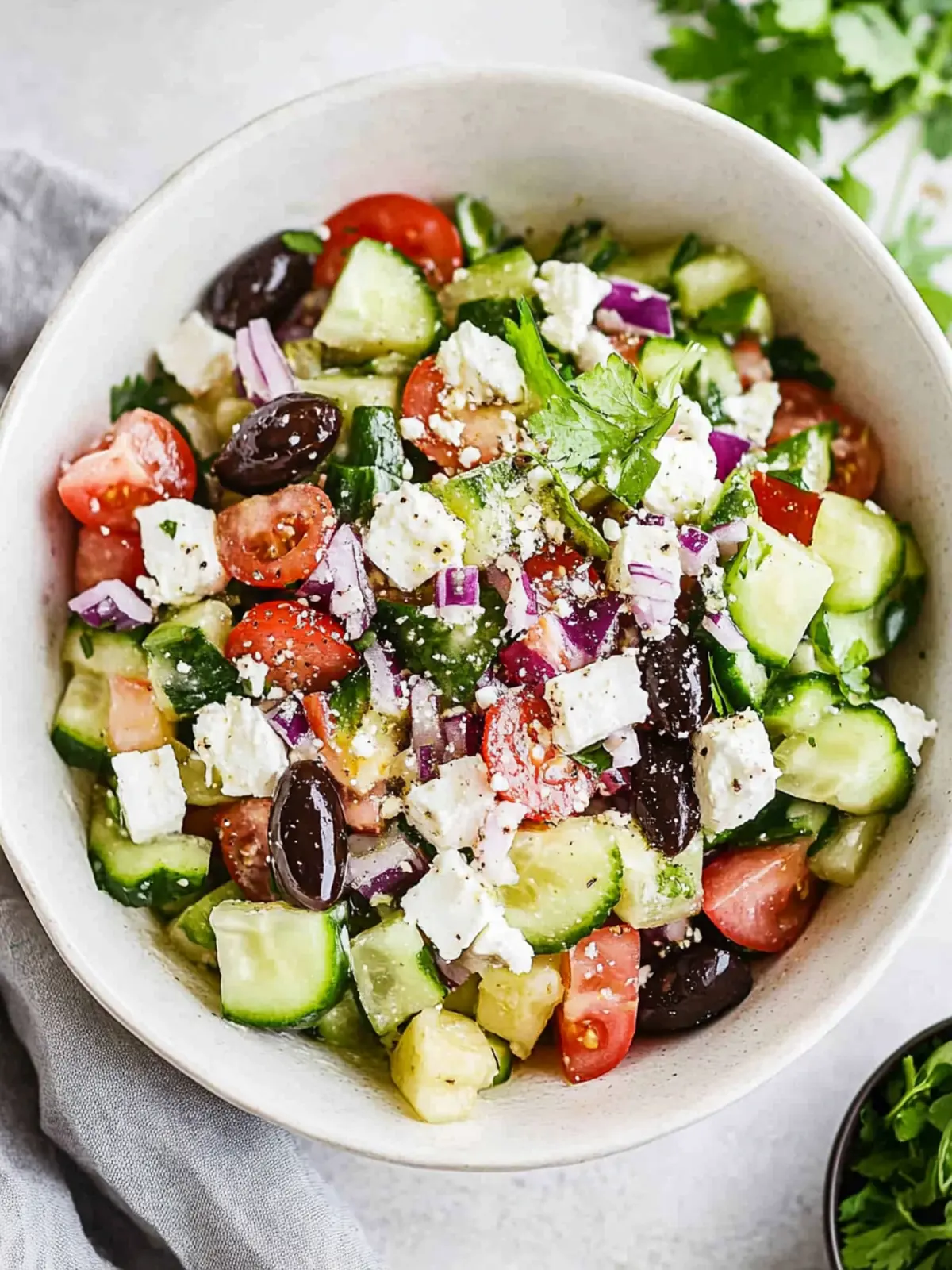
Greek Salad Recipe FAQs
What type of cucumbers should I use for Greek Salad?
Absolutely! I recommend using English cucumbers for their crispness and milder taste. If you can t find them, any fresh variety will do, but avoid those with dark spots or that seem overly soft, as they may not give the salad the crunch it deserves.
How long can I store leftover Greek Salad in the fridge?
The more the merrier! You can store leftovers in an airtight container in the refrigerator for up to 3 days. Make sure to keep the dressing separate until you’re ready to eat, which helps maintain the fresh texture of the vegetables.
Can I freeze Greek Salad?
Freezing Greek Salad is not recommended. The vegetables, especially tomatoes and cucumbers, tend to become mushy and lose their crispness once thawed. Instead, I suggest using any leftover salad ingredients within a few days for other meals like wraps or grain bowls.
How can I ensure my Greek Salad dressing is perfectly balanced?
Very good question! Start by whisking together olive oil, red wine vinegar, mustard, oregano, salt, pepper, and lemon juice. Taste the dressing, and don t be afraid to adjust the flavors! If it’s too tangy, add a little more olive oil; if it needs zing, a splash more vinegar will do the trick. I often let it sit for about 30 minutes before adding it to the salad; this allows the flavors to meld beautifully!
Are there any common allergens in Greek Salad?
While Greek Salad is generally gluten-free and vegetarian, it does contain dairy from feta cheese. If you re serving someone with a dairy allergy, you can omit the feta or use a vegan cheese alternative. Additionally, ensure the olives or any store-bought components are free from allergens if necessary.
Can I customize the ingredients in my Greek Salad?
Absolutely! Feel free to swap radishes for extra crunch or even add grilled chicken or shrimp for a filling main dish. It s all about personal preference and what you have on hand. The beauty of Greek Salad is its versatility, so get creative!